



KEYNOTE SPEAKERS
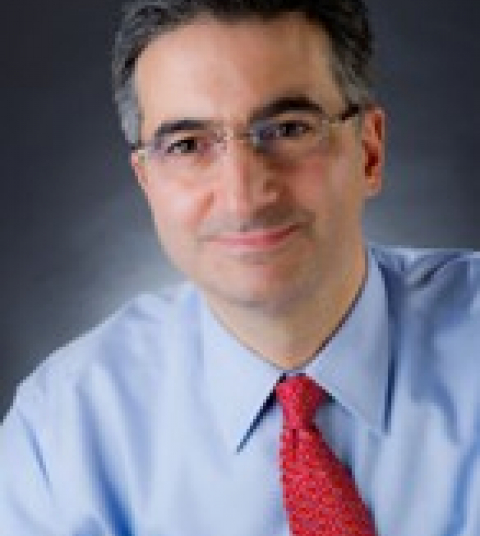
Professor Robert L Klitzman
M.D.
Program Director, Bioethics
Professor of Psychiatry, Columbia University Irving Medical Center
Columbia University
KEYNOTE ADDRESS
DAY 1 (October 31, 2025) │ 09:45 – 10:45 | Lecture Theatres 3 – 4
AI and the Care of the Elderly
Artificial Intelligence (AI) is affecting many aspects of the care of the elderly, and can offer important potential benefits, but also potential risks, and can have several key limitations. AI has been expanding rapidly into many aspects of clinical research and care, as well as other aspects of social and individual life, receiving enormous attention and hype. Algorithms can assist with the diagnosis, treatment and prevention of countless diseases, and in several areas of radiology are as effective as physicians. But other AI applications can have errors in sensitivity and specificity in disease detection, and can “hallucinate”, making other kinds of errors. Algorithms are developed and trained using particular data sets from populations that may differ in race, ethnicity or other factors from populations on which the algorithm is then employed, leading to biased results. Elderly patients may also engage with algorithms outside of doctors’ offices, through wearables or chatbots that can provide helpful health-related interactions, but can also pose challenges. Chatbot “companions” for seniors are being developed and marketed that can converse with elderly patients, increasing interactions that can help reduce cognitive decline. But such chatbots can also gather sensitive data concerning depression, suicidality, or financial matters, posing questions regarding whether such chats should be monitored, and if so, by whom, and what such individuals should do with this information. This talk will explore these challenges, and ethical guidelines, frameworks and best practices that strive to reduce such risks to enhance effective and safe care.
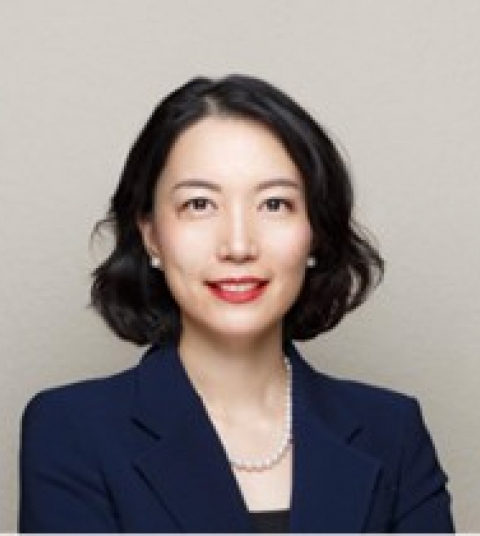
Professor Jing Wang
PhD, MPH, RN, FAAN
Dean and Professor
College of Nursing
Florida State University
KEYNOTE ADDRESS
DAY 1 (October 31, 2024) │ 11:15 – 12:00 | Lecture Theatres 3 – 4
Leading Smart and Connected Ageing at Home: A Nursing Journey of Innovation and Global Perspectives
As global populations age, the aspiration to remain healthy, safe, and connected at home has become both a societal imperative and a scientific frontier. Evidence from systematic and umbrella reviews demonstrates that smart and connected health technologies—including sensors, wearables, robotics, AI-enabled decision support, and digital health platforms—can improve independence, reduce functional decline, and enhance quality of life for older adults, while also presenting challenges related to adoption, equity, interoperability, cost, and data governance. Nursing leadership is critical to bridging technology and humanity: nurses build trust, tailor interventions, and integrate innovations into daily practice across diverse cultural and policy contexts. Global exemplars, from nurse-led smart health homes in Florida to AI partnerships and lifestyle medicine clinics, show how nursing can drive responsible innovation, advance equity, and shape policy frameworks for sustainable ageing care. This talk reviews the scientific evidence, identifies opportunities for global collaboration, and calls for a future where nurses lead the translation of digital innovation into smart, connected, and compassionate ageing-at-home solutions worldwide.
Professor Emerita Jill White
AM, RN, RM, MEd, PhD, MHPol, FACN, FAAN
Professor Emerita
Susan Wakil School of Nursing and Midwifery
The University of Sydney
KEYNOTE ADDRESS
DAY 2 (November 1, 2025) │ 10:15 – 11:00 │ Lecture Theatres 3 – 4
Renewing the Definitions of Nursing and Nurse: Honouring the past and shaping the future
"It is self evident that an occupation, especially a profession, whose services affect human life must define its function"
(Henderson, 1991)
Renewing a decades old definition of a service which profoundly affects human life is a daunting prospect. Presuming to be able to craft text which represents 30 million people globally is even more daunting but these were the tasks set by the International Council of Nursing and which were delivered in June 2025 at the Helsinki conference. The challenge to deliver a new definition of nursing and nurse which will be subject of our time together in this session. The presentation will describe the innovative and inclusive nature of the methodology used, the processes by which the definitions were "wordsmithed" and ratified, and finally the ways to which you can utilise them for your future in nursing and for the profession.
Professor Emma Stanmore
PhD, MRes, BNurs (Hons), DN, RN
Professor
Division of Nursing, Midwifery & Social Work/School of Health Sciences
The University of Manchester
KEYNOTE ADDRESS
DAY 2 (November 1, 2025) │ 11:20 – 12:00 │ Lecture Theatres 3 – 4
Leadership in Nursing Research: Digital health innovation to improve functional decline and reduce falls in older adults
Despite robust evidence supporting strength and balance training to prevent falls and mitigate functional decline, uptake and sustained engagement among older adults remains low due to accessibility, motivation, and delivery challenges. To address these barriers, KOKU, a digital, personalised, and progressive strength and balance programme, was co-developed using a user-centred design approach. This ensured that the needs, preferences, and lived experiences of older adults were central to every stage of the program’s development. Through iterative co-design workshops, usability testing, and feedback loops, KOKU was shaped to be intuitive, adaptable, and motivating for older users, enhancing its relevance and acceptability as a self-management tool.
To evaluate the effectiveness of KOKU, a two-arm, parallel-group randomized controlled trial (RCT) was conducted among 202 community-dwelling older adults aged 60 years and over. Participants were randomly assigned to either the intervention group (KOKU plus standard care) or the control group (standard care only), with assessments conducted at baseline, 6 weeks, and 12 weeks. Standard care included exercise advice and a falls prevention leaflet, while those in the intervention group were encouraged to engage with the KOKU digital programme three times per week. The primary outcome was balance function as measured by the Berg Balance Scale at 12 weeks. Secondary outcomes included lower-limb strength, falls risk, quality of life, concerns about falling, physical activity, and program usability.
Results demonstrated a statistically significant and clinically meaningful improvement in balance in the KOKU group compared to control at both 6 and 12 weeks (mean difference at 12 weeks: 6.35; 95% CI: 4.48 to 8.22). Lower-limb strength, measured via the Five Times Sit-to-Stand test, also improved in the KOKU group (mean difference: -6.85 seconds; 95% CI: -10.47 to -3.24). Trial retention was high, with 90% of participants completing the 12-week follow-up. Participants reported high acceptability and usability of the KOKU program, reinforcing the value of the user-centred design process in creating an intervention that aligns with older adults’ needs and capabilities.
The successful implementation and positive outcomes of KOKU were supported by a framework of transformational leadership within the development and research team. This leadership approach fostered innovation, empowered co-design participants, and promoted a shared vision of enabling independence and reducing falls through digital health. By inspiring cross-disciplinary collaboration and maintaining focus on the end-user, transformational leadership was instrumental in translating evidence-based practice into an accessible digital solution.
In conclusion, the KOKU digital strength and balance programme significantly improved physical function and reduced falls risk in older adults over 12 weeks. The combination of user-centred design, rigorous RCT evaluation, and effective implementation strategy—underpinned by transformational leadership—demonstrates the potential for digital interventions to deliver meaningful health outcomes at scale. KOKU represents a promising, scalable, and person-centred approach to support ageing populations in maintaining independence and reducing falls risk through home-based self-management.
Professor Olga Yakusheva
PhD, MSE, FAAN
Professor
School of Nursing
Johns Hopkins University
KEYNOTE ADDRESS
DAY 2 (November 1, 2025) │ 17:05 – 17:45 │ Lecture Theatres 3 – 4
A Human Capital Approach to Nursing’s Value and Payment
Join us for a presentation by healthcare economist Olga Yakusheva, focused on reimagining the economic value of nursing. Discover how a paradigm shift could transform nurses into revenue-generators and strategic assets within the healthcare system, rather than merely viewing them as labor costs. Gain insights from health policy and economics that emphasize the crucial role of nursing in enhancing patient outcomes and fostering sustainable, human-centered health care.

Day 1 at 14:00 (UTC+8) Lecture Theatre 3 - 4
Active and Healthy Aging: Cutting-edge Technologies and Practical Applications
Prof Wenru Wang, National University of Singapore
Prof Cuntai Zhang, Tongji Hospital, Tongji Medical College of Huazhong University of Science and Technology
Prof Hongliu Yu, University of Shanghai for Science and Technology
Prof Ka Li, Sichuan University
Dr the Hon Lam Ching Choi, Executive Council, HKSARG; Haven of Hope Christian Service
Prof Hui Feng, Central South University
Day 1 at 14:00 (UTC+8) Lecture Theatre 2
Active and Healthy Aging: Social-Psychological-Behavioral Intervention
Prof Xiaomei Cong, Yale University
Prof Doris Yu, The University of Hong Kong
Prof Anna Axelin, University of Turku
Prof Lily Dongxia Xiao, Flinders University
Prof. Rainbow T. H. Ho, The University of Hong Kong
Day 2 at 09:00 (UTC+8) Lecture Theatre 3 - 4
Rising Stars in Nursing
Dr Ock Sim Kim, Postdoctoral Fellow, Yonsei University
Dr Chaowarit Ngernthaisong, Lecturer, Chulalongkorn University
Prof Wenjun Chen, Assistant Professor, Central South University
Prof Kevin Luk, Assistant Professor, National University of Singapore

Day 2 at 12:00 (UTC+8)
Celebration of the 30th Anniversary of HKUSON: Three Decades of Nursing Leadership
Prof Sophia Chan, HKU Primary Health Care Academy
Prof Agnes Tiwari, The Nursing Council of Hong Kong
Prof Chia-Chin Lin, The University of Hong Kong

Day 2 at 14:30 (UTC+8)
Future of Leadership in Nursing Education
Prof Honghong Wang, Central South University
Prof Yan Hu, Fudan University
Prof June Zhang, Sun Yat-sen University
Prof Lili Zhang, Southern Medical University
Prof Chia-Chin Lin, The University of Hong Kong

Day 2 at 16:05 (UTC+8)
Leadership in Nursing Workforce
Prof Sheila R. Bonito, University of the Philippines Manila
Securing the Future: Addressing Supply Challenges in the Global Nursing Workforce
Dr Danny Tong, Hospital Authority, Hong Kong
Strategies to Address Nursing Workforce Challenges - The Hospital Authority's Perspective
Prof Mari Ikeda, The University of Tokyo
Practice, Research, and Policy Advancement Drive Nurses Forward